 Bloomprint
Cat-safe houseplants
Pets and plants · Updated August 5, 2026 · 3 min read
Short answer
Spider plant, areca palm, calathea, maranta, peperomia, Boston fern, hoya, pilea, cast iron plant, Phalaenopsis orchid, African violet and fittonia have no known toxicity to cats. Meanwhile lilies (Lilium, Hemerocallis) should never enter a home with a cat — even the pollen can cause kidney failure.
On this page
"Cat-safe" means one thing: no known record of toxicity in cats. Not toxic is not the same as edible — any plant eaten in quantity can cause vomiting and diarrhoea.
The most important thing first: lilies
If a cat owner learns only one fact, make it this. True lilies (Lilium species) and daylilies (Hemerocallis) cause acute kidney failure in cats. It is not just the leaves: flowers, pollen and even the vase water are dangerous. Pollen lands on the coat and is swallowed during grooming.
With a cat in the house, lilies — including cut bouquets — should not come through the door. If contact is suspected, do not wait: go straight to an emergency vet.
Twelve plants with no known toxicity
| Plant | Light | Water |
|---|---|---|
| Spider plant (Chlorophytum comosum) | Bright indirect | 7–10 days |
| Areca palm (Dypsis lutescens) | Bright indirect | 5–8 days |
| Calathea | Medium indirect | 5–7 days |
| Maranta (prayer plant) | Medium indirect | 5–7 days |
| Peperomia | Medium–bright indirect | 8–12 days |
| Boston fern (Nephrolepis exaltata) | Medium indirect | 4–6 days |
| Hoya | Bright indirect | 10–14 days |
| Pilea peperomioides | Bright indirect | 7–10 days |
| Cast iron plant (Aspidistra) | Tolerates low light | 10–14 days |
| Phalaenopsis orchid | Bright indirect | 7–10 days |
| African violet (Saintpaulia) | Bright indirect | 5–7 days |
| Fittonia | Medium indirect | 3–5 days |
Spider plant is a special case: cats are drawn to it and it is thought to have a mildly stimulating effect. It is not toxic, but eaten in quantity it can cause vomiting.
What should not be in a home with a cat
High risk — do not keep at all:
- Lily (Lilium) and daylily (Hemerocallis) — kidney failure
- Sago palm (Cycas revoluta) — liver failure
- Oleander (Nerium oleander) — cardiac
- Autumn crocus (Colchicum autumnale) — multi-organ
Moderate risk — keep out of reach:
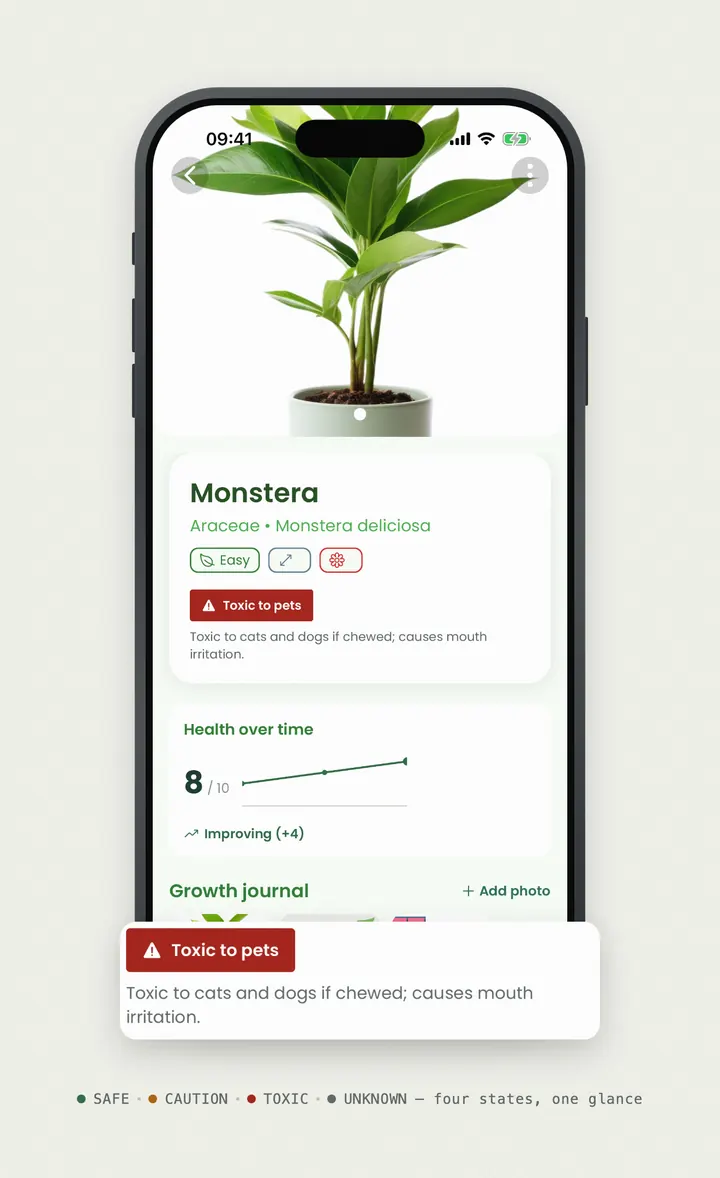
- Monstera, philodendron, pothos, dieffenbachia, caladium, peace lily — calcium oxalate, burning in the mouth
- Snake plant, ZZ plant — saponins, vomiting and diarrhoea
- Aloe vera — vomiting, lethargy
- Kalanchoe — cardiac glycosides
- Amaryllis, tulip and daffodil bulbs — the bulb is the most toxic part
Three things that make even a "safe" plant risky
- Fertiliser and pesticide residue. The plant may be safe; what you sprayed on it is not. Keep the cat away after treating.
- Soil amendments. Worm castings and organic additives encourage cats to dig; cover the surface with coarse gravel.
- Drainage stones. A swallowed pebble is a genuine obstruction risk.
Keeping cats out of the pots
- Hanging pots and high shelves work best.
- Keep cat grass available; it absorbs most of the urge to chew.
- Foil or double-sided tape around the pot.
- Coarse gravel or bark chips on the soil surface.
- Citrus peel deters some cats.
If you suspect your cat has eaten something
Take a piece of the plant, clear any residue from the cat's mouth and call your vet. Do not try to induce vomiting yourself. Even a plant with no known toxicity can cause gastrointestinal upset in quantity.
Frequently asked questions
If a plant is non-toxic, is it fine for my cat to eat it?
Not quite. Non-toxic does not mean digestible; any plant eaten in quantity can cause vomiting and diarrhoea. It means there is no risk of systemic poisoning.
Does cat grass really help?
For most cats, yes. Cats seek out fibrous greens, and when a suitable alternative is within reach their interest in potted plants drops noticeably.
Are cut flower bouquets a risk too?
Yes, and it is often overlooked. Lilies are very common in bouquets. Check every bouquet that comes into a home with a cat, and if it contains lilies, do not bring it in.
I do not know what the plant is. What should I do?
Toxicity cannot be assessed without the species. Photograph the leaf, the stem and any flower clearly and identify it; in an emergency, take a piece of the plant to the vet with you.