 Bloomprint
Plants that are toxic to dogs
Pets and plants · Updated August 5, 2026 · 2 min read
Short answer
The five most dangerous: sago palm, oleander, azalea/rhododendron, autumn crocus and yew — small amounts of these are life-threatening. The commoner indoor plants — monstera, philodendron, pothos, dieffenbachia — cause burning and vomiting: painful, but rarely fatal.
On this page
Dogs carry a different risk profile from cats: they eat larger amounts, they dig up soil and bulbs, and they usually have garden access. Which means the real danger for dogs lies less in houseplants and more in garden plants and flower bulbs.
Emergency group — dangerous in small amounts
If you suspect your dog has eaten any of these, go to a vet without waiting for symptoms.
1. Sago palm (Cycas revoluta) The most dangerous. The whole plant is toxic and the seeds most of all. It causes acute liver failure with a high fatality rate. Symptoms: vomiting, diarrhoea, jaundice, seizures.
2. Oleander (Nerium oleander) Contains cardiac glycosides. A few leaves are enough to disturb heart rhythm. Symptoms: vomiting, weakness, irregular heartbeat, collapse.
3. Azalea and rhododendron Grayanotoxin. Heavy drooling, vomiting, weakness, cardiac arrhythmia, coma.
4. Autumn crocus (Colchicum autumnale) Colchicine. Symptoms can appear days later and it causes multi-organ damage. The delay is what makes it so dangerous.
5. Yew (Taxus) Every part except the red aril is toxic. It can cause sudden cardiac arrest.
Moderate group — painful, rarely fatal
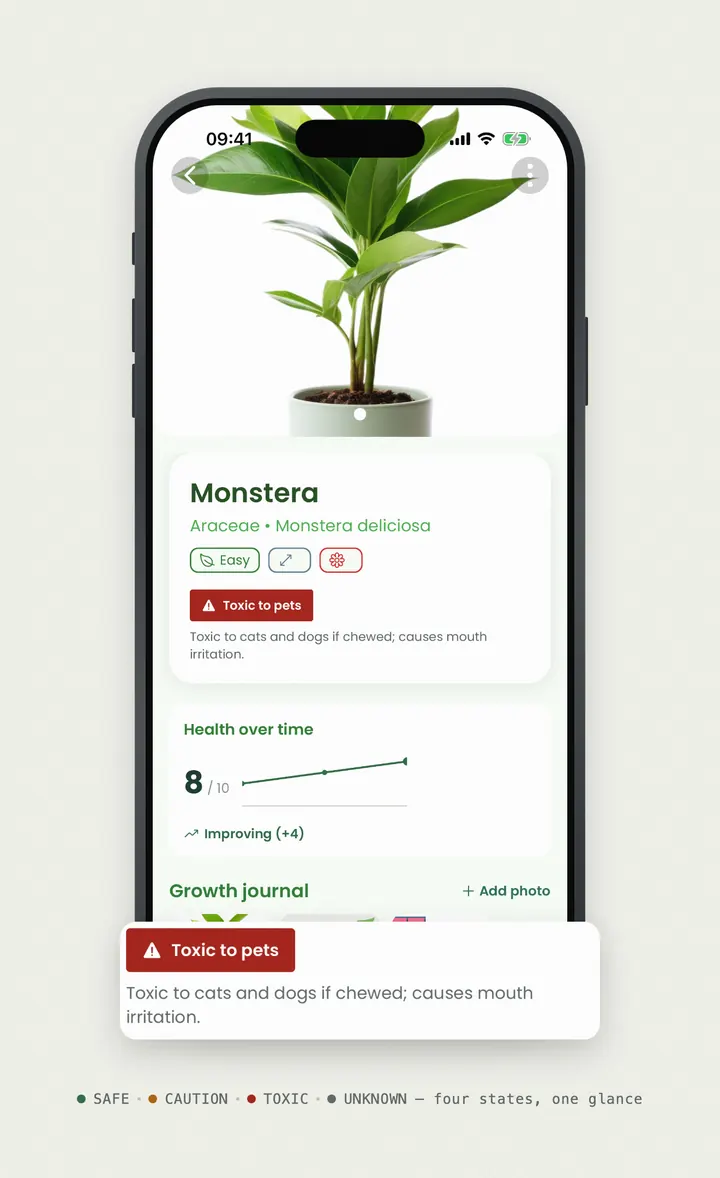
The Araceae family, containing calcium oxalate. Immediate burning in the mouth, heavy drooling, vomiting, difficulty swallowing:
- Dieffenbachia
- Monstera (Monstera deliciosa)
- Philodendron
- Pothos (Epipremnum)
- Caladium
- Peace lily (Spathiphyllum)
- Anthurium
Saponin-containing plants — vomiting and diarrhoea:
- Snake plant (Dracaena trifasciata)
- ZZ plant (Zamioculcas)
- Aloe vera (particularly the latex in the leaf rind)
Cardiac glycosides — treat with care:
- Kalanchoe
- Amaryllis (Hippeastrum) — the bulb is the most toxic part
Flower bulbs
A category of their own, because dogs dig. The bulb is markedly more toxic than the parts above ground:
- Daffodil (Narcissus)
- Tulip (Tulipa)
- Hyacinth (Hyacinthus)
- Amaryllis
Fence off freshly planted bulb beds.
Symptoms of poisoning
- Heavy drooling, pawing at the mouth
- Vomiting, diarrhoea (possibly bloody)
- Loss of appetite, lethargy
- Tremors, unsteady walking, seizures
- Irregular or rapid heartbeat
- Difficulty breathing
- Change in gum colour
What to do if you suspect poisoning
- Move the dog away from the plant and clear its mouth.
- Take a piece of the plant — leaf, flower, and the label if there is one. Species information directly determines treatment.
- Estimate how much and when.
- Call your vet. For the emergency group, go without waiting for symptoms.
- Do not try to induce vomiting. With some toxins that makes the damage worse; let the vet decide.
Prevention
- Remove emergency-group plants from the garden entirely; training is not reliable protection here.
- Move houseplants to high shelves and hanging pots.
- Check the species and its toxicity before buying a new plant.
- Keep compost and prunings out of reach — drying does not reduce toxicity.
- A gravel layer over beds discourages digging.
Frequently asked questions
My dog eats grass. Is that a sign of poisoning?
Usually not. Grass eating is common in dogs and mostly harmless. Treated lawns are a genuine risk, though — keep away from areas that have been sprayed.
Are dried leaves toxic too?
For most plants, yes. Drying does not destroy the toxin; dried oleander and yew leaves remain dangerous. Keep prunings out of reach.
Are small breeds more at risk?
Yes. Severity scales with body weight, so the same amount of leaf affects a 5 kg dog far more heavily than a 30 kg one.
Is identifying it with an app enough?
No, and it should not be relied on. Photo identification gives you a lead, not a diagnosis, and similar-looking species can differ enormously in toxicity. In any suspected poisoning, take a piece of the plant to a vet.